
Fix Loose Synthetic Rattan Weave DIY: Easy 4-Step Repair
Fix loose synthetic rattan weave diy tutorials empower patio owners to repair unraveling wicker strands without buying replacement furniture or hiring professional technicians. Daily use, friction, and shifting weight can cause individual synthetic polyethylene (PE) resin strands to pop out of place or snap at high-tension frame joints. Left unfixed, a single loose end quickly pulls surrounding rows loose, causing large sections of the seating surface to sag and unravel.
Executing a fix loose synthetic rattan weave diy project requires basic household tools, plastic-bonding adhesive, and proper tensioning techniques to weave strands back into place seamlessly.
This guide details required repair tools, adhesive selection, step-by-step weaving instructions, and preventive maintenance tips.
1. Assembling Your DIY Synthetic Rattan Repair Kit
Having the correct flexible tools and plastic-bonding adhesive prevents new repair strands from popping free when weight is applied.
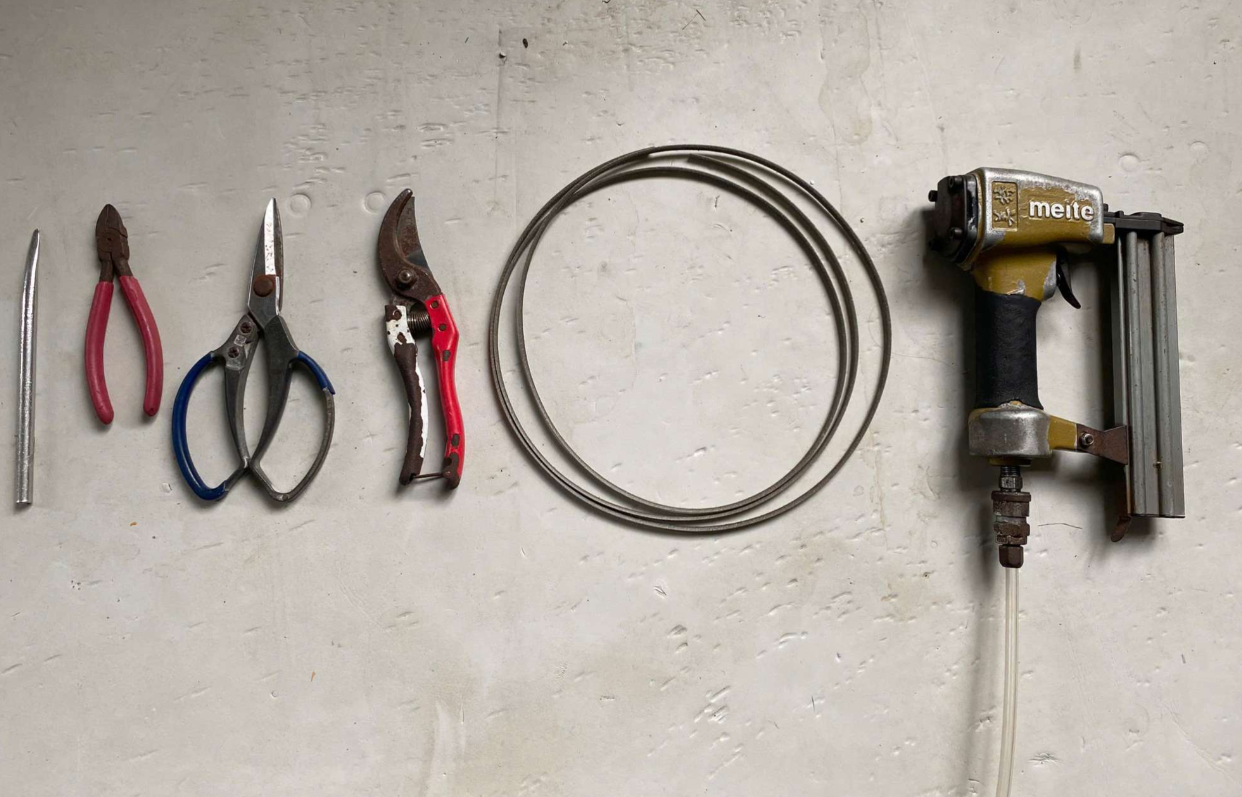
| Required Repair Tool | Recommended Material Type | Primary Function |
|---|---|---|
| Waterproof Plastic Adhesive | Gel Super Glue or Marine Epoxy | Bonds synthetic strands to the frame |
| Replacement PE Rattan Strand | Matching width & color PE strip | Replaces snapped or short sections |
| Clamping Tool | Small spring clamps or clothespins | Holds the strand taut while glue cures |
| Softening Heat Source | Hairdryer or low-temperature heat gun | Makes stiff plastic pliable |
-
Adhesive Selection: Avoid rigid non-flexible glues. Synthetic resin flexes when seated on, which will break rigid glue bonds instantly.
-
Material Quality: Premium high-density polyethylene (HDPE) strands flex without breaking during repairs. Learn how material grades compare in our PE rattan vs PVC wicker difference comparison.
2. Trimming and Heating the Damaged Strand
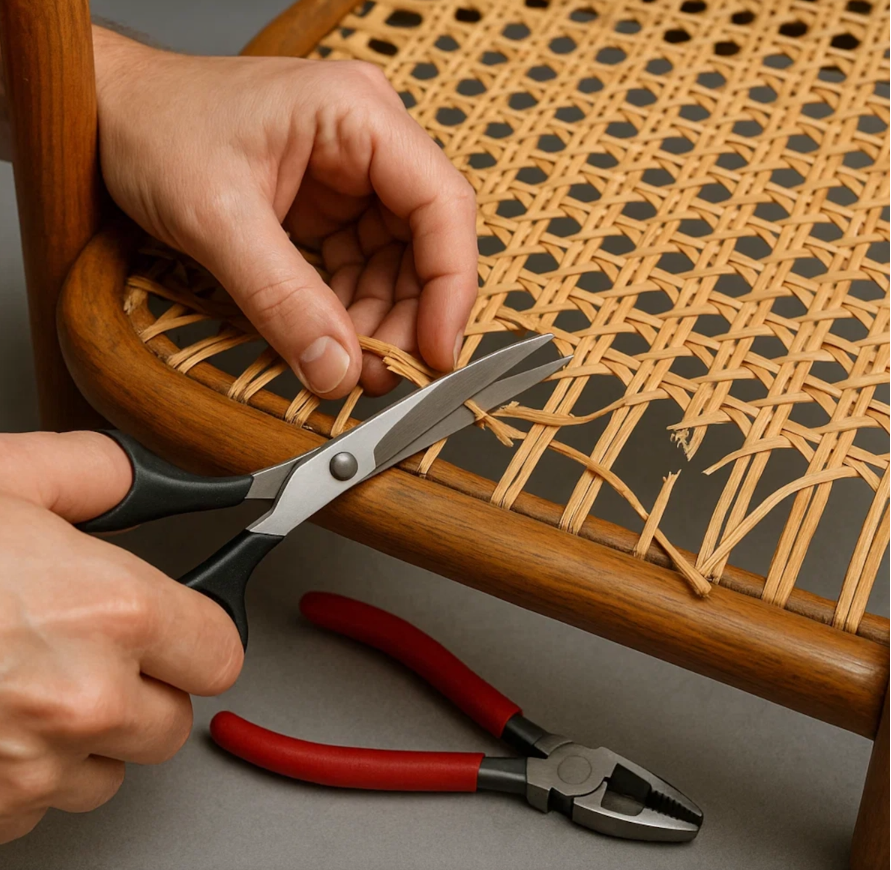
Preparing damaged ends before applying new weave strands ensures a flush finish that blends into original furniture patterns.
-
Clean Cuts: Use sharp utility scissors or wire cutters to trim frayed, split ends back to a firm, undamaged section of the weave pattern.
-
Pliable Heating: Blow warm air using a hairdryer over stiff synthetic strands for 10-15 seconds. Heating softens PE plastic, making it easy to bend and tuck around frame corners.
3. Step-by-Step Weaving and Securing Process
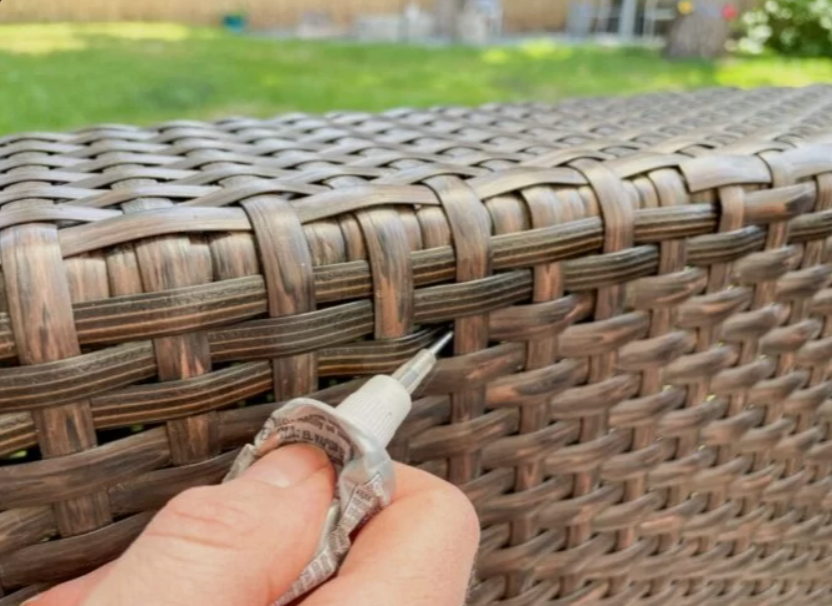
Following the original over-under weaving sequence maintains structural integrity across the repair area.
-
Tucking the Anchor End: Apply a dot of waterproof gel super glue to the end of the new strand, tuck it behind an intact perpendicular row, and secure it with a spring clamp.
-
Following Pattern Rhythm: Weave the strand tightly in the existing “over-under-over” sequence. Pull the strand taut at every cross-section to eliminate sagging.
-
Final Anchor: Trim excess length, apply glue to the tail end, tuck it securely behind an underside frame bar, and clamp for 30 minutes until cured.
-
Restoring Color: If the surrounding original wicker shows UV bleaching next to fresh repair strands, restore uniform color using steps from our spray paint rattan furniture guide.
4. Preventing Future Wicker Unraveling
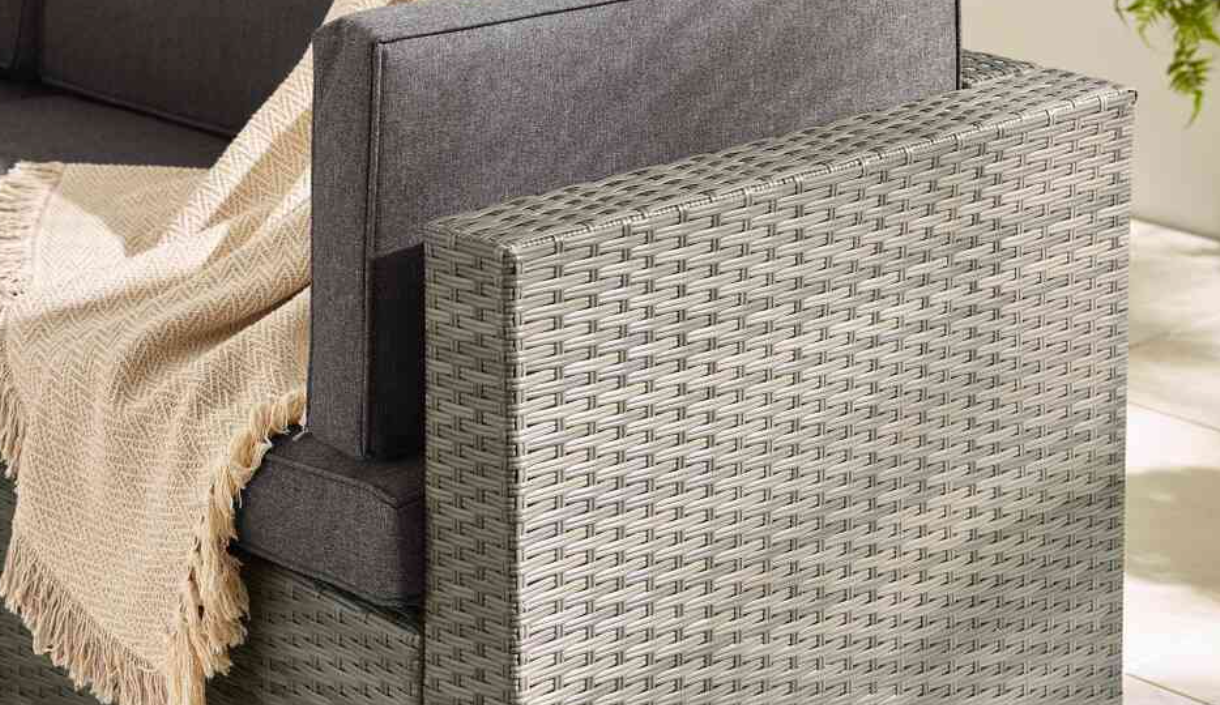
Simple protective measures reduce friction and UV weathering, stopping weave strands from snapping prematurely.
-
Cushion Distribution: Always use fitted seat cushions to distribute body weight evenly across weave rows rather than placing direct pressure on single strands. View seating setups in our 5 seater outdoor sofa set collection.
-
Moisture Sealing: Shield repaired frames from sun bleaching and heavy rain by applying care methods detailed in our waterproof rattan furniture guide.
Frequently Asked Questions
Q: What is the best glue to fix loose synthetic rattan weave DIY projects?
A: Waterproof gel super glue or flexible marine-grade epoxy works best. Avoid standard wood glue or rigid craft glues, as they fail when synthetic plastic flexes under weight.
Q: Can I fix a broken strand if I do not have matching replacement wicker?
A: Yes. If the original strand snapped near the frame edge, heat the short strand to stretch it, apply waterproof gel glue, and clamp it directly to the hidden underside metal frame bar.
Final Advice
Completing a fix loose synthetic rattan weave diy repair extends the functional lifespan of patio seating at minimal cost. By trimming split ends, heating stiff resin strands, and anchoring tucked joints with flexible waterproof adhesives, you maintain structural support and clean aesthetics for years to come.
For more outdoor living inspiration, furniture care guides, and factory-direct collections, visit outdoorrattanfurniture.store.